





























TIPS
Helpful Home Tips from Your Local Plumbing Pros in Fresno – Zip Appliance & Plumbing Repair

Dryer Vent Issues That Cause Appliance Failures in Fresno?
A clogged or neglected dryer vent may seem minor, but it quietly strains appliances, raises safety risks, and shortens their lifespan—attention today prevents costly failures tomorrow. - Appliance Boss
Introduction
Dryer vent problems are often invisible until something goes wrong. In Fresno homes, these hidden issues quietly undermine appliance performance, raise energy costs, and accelerate breakdowns. What seems like a simple laundry inconvenience can quickly evolve into a cascade of appliance failures if dryer vent systems are ignored.
Why Dryer Vent Problems Are Common in Fresno Homes
Fresno’s dry climate, dust levels, and frequent dryer usage create ideal conditions for vent obstruction. Lint accumulates faster. Airflow degrades sooner. Over time, even well-maintained dryers struggle to operate efficiently when vent systems are neglected.
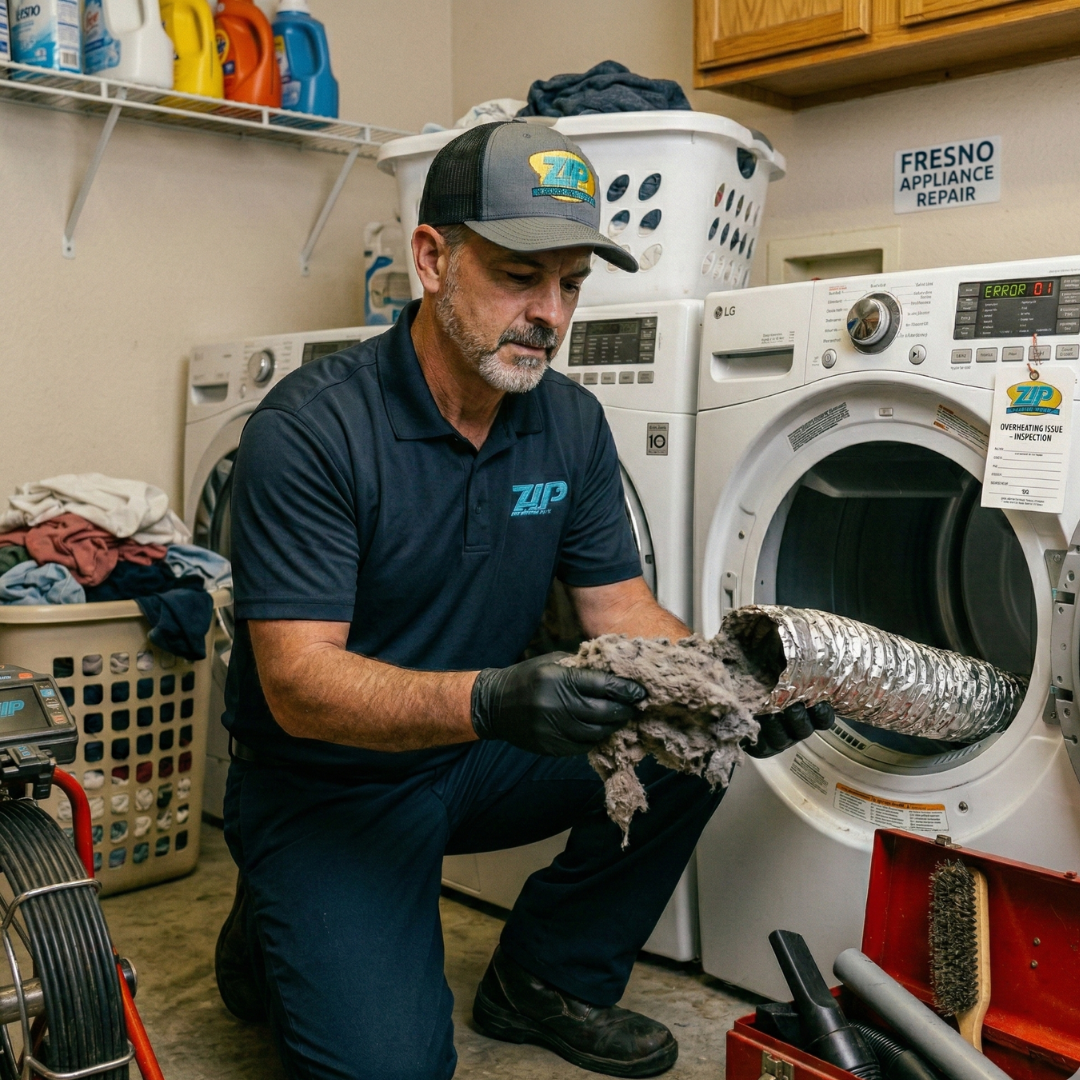
How Dryer Vents Affect Overall Appliance Performance
Dryer vents regulate heat and moisture expulsion. When airflow is restricted, heat lingers. Moisture spreads. Appliances compensate by working harder, shortening their operational lifespan and increasing mechanical stress across internal components.
The Hidden Connection Between Dryer Vents and Appliance Failures
A compromised vent doesn’t only affect the dryer. Excess heat radiates outward. Moisture migrates into walls and adjacent appliances. Electrical systems age prematurely. The result is a chain reaction of failures that often goes misattributed to appliance defects rather than vent issues.
Early Warning Signs of Dryer Vent Issues
Dryer vent problems rarely appear suddenly. They announce themselves subtly, then progressively worsen if ignored.
Clothes Taking Longer to Dry Than Normal
Extended drying cycles are often the first red flag. Restricted airflow traps moisture inside the drum, forcing the dryer to run longer and hotter.
Dryer Feeling Hot to the Touch
A dryer exterior that feels unusually warm signals poor heat dissipation. This thermal buildup stresses internal components and increases failure risk.
Burning Smells or Musty Odors
Burning odors often indicate lint overheating. Musty smells suggest trapped moisture. Both point to inadequate venting.
Excess Lint Around the Dryer Area
Lint escaping into the laundry space rather than exiting outdoors is a clear sign of vent obstruction or leakage.
Increased Energy Bills Linked to Dryer Vents
Restricted airflow forces dryers to consume more energy per cycle. Over time, this inefficiency shows up as steadily rising utility costs.
Common Dryer Vent Issues in Fresno Homes
Several recurring problems plague residential dryer vent systems throughout the area.
Lint Buildup Inside Dryer Vents
Lint accumulation is inevitable. Without routine cleaning, it compacts into dense obstructions that drastically reduce airflow.
Crushed or Kinked Vent Hoses
Flexible vent hoses often collapse behind dryers. Even minor bends can significantly restrict exhaust flow.
Improper Vent Installation and Routing
Excessive turns, long runs, or poor slope design impede airflow and trap debris within the vent line.
Blocked Exterior Vent Covers
Outdoor vent covers can become clogged with lint, debris, or pest nests, preventing proper exhaust release.
Vent Length and Poor Airflow Design
Overextended vent runs reduce air velocity, allowing lint to settle instead of exiting the system.
How Dryer Vent Issues Cause Appliance Failures
Restricted venting creates an environment of sustained thermal and mechanical stress.
Overheating and Thermal Stress on Dryers
Excess heat accelerates component degradation. Thermal cycling becomes erratic, reducing appliance reliability.
Strain on Heating Elements and Motors
Motors labor longer. Heating elements cycle excessively. These conditions dramatically shorten service life.
Moisture Buildup Affecting Nearby Appliances
Escaped moisture infiltrates surrounding appliances, encouraging corrosion and electrical instability.
Electrical Component Wear from Excess Heat
Heat-sensitive electronics degrade faster when exposed to prolonged elevated temperatures.
Premature Appliance Breakdowns Explained
When systems operate outside designed thermal thresholds, failure becomes a matter of when, not if.
Safety Risks of Neglected Dryer Vents
Beyond performance concerns, dryer vent issues pose genuine safety hazards.
Fire Hazards Caused by Lint Accumulation
Lint is highly combustible. When combined with trapped heat, it becomes a serious fire risk.
Carbon Monoxide Concerns for Gas Dryers
Blocked vents can prevent proper exhaust of combustion gases, allowing carbon monoxide to accumulate indoors.
Structural Damage from Trapped Moisture
Persistent moisture damages drywall, framing, and insulation, compromising structural integrity over time.
Why DIY Dryer Vent Cleaning Often Falls Short
Surface-level cleaning rarely addresses the full extent of vent contamination.
Limitations of Store Bought Cleaning Kits
Consumer kits lack reach and power. They often miss compacted lint deep within vent lines.
Hidden Blockages Inside Walls or Ceilings
Many vent obstructions reside beyond visible access points, requiring specialized tools to locate and remove.
How Professionals Inspect Dryer Vent Systems
Professional inspections reveal issues invisible to the naked eye.
Tools Used to Diagnose Dryer Vent Problems
Technicians employ airflow meters, cameras, and pressure gauges to assess vent performance accurately.
Video Inspections for Dryer Vents
Internal cameras identify blockages, damage, and design flaws throughout the entire vent path.
Airflow Testing and Pressure Measurements
Objective measurements confirm whether vents meet safe operational standards.
Professional Dryer Vent Cleaning Methods
Advanced cleaning methods restore full airflow and eliminate hidden hazards.
Rotary Brush and High Powered Vacuum Systems
These systems dislodge and extract compacted lint without damaging vent materials.
Compressed Air and Specialized Cleaning Tools
High-velocity air clears residual debris and verifies unobstructed exhaust flow.
Preventing Future Dryer Vent Issues
Prevention is far less costly than repair.
Recommended Dryer Vent Cleaning Frequency
Annual cleaning is ideal for most homes. High-use households may require more frequent service.
Proper Vent Materials and Installation Tips
Rigid metal ducts, minimal turns, and short vent runs maximize airflow and reduce lint retention.
Best Practices for Daily Dryer Use
Avoid overloading dryers. Clean lint traps after every cycle. Monitor drying times consistently.
When to Call a Professional for Dryer Vent Service
Recurring drying issues, persistent odors, or rising energy bills warrant immediate professional evaluation.
Cost Factors for Dryer Vent Cleaning in Fresno
Costs vary based on vent length, accessibility, and severity of blockage. Preventive service remains far more economical than appliance replacement.
Benefits of Professional Dryer Vent Maintenance
Professional care improves efficiency, reduces fire risk, and stabilizes appliance performance.
Extending Appliance Lifespan Through Proper Venting
Well-maintained vents reduce mechanical strain, prolonging appliance lifespan and preserving manufacturer performance standards.
Final Thoughts on Dryer Vent Issues That Cause Appliance Failures in Fresno?
Dryer vent issues are often overlooked, yet they play a decisive role in appliance performance, safety, and longevity. Restricted airflow, trapped heat, and lingering moisture quietly strain dryers and surrounding appliances until failure becomes inevitable. Addressing vent problems early reduces fire risks, lowers energy costs, and preserves the mechanical integrity of your home’s appliances.
For trusted local help, Zip Appliance Repair and Service provides professional dryer vent and appliance solutions throughout Fresno. Visit
https://zipappliancerepairfresno.com/Zip-Appliance-and-plumbing-Repair-Fresno
or call (559) 272-4265 to schedule service and protect your appliances before minor vent issues turn into major failures.
FAQs
What are the most common dryer vent issues in Fresno?
The most frequent problems include lint buildup, crushed or kinked vent hoses, blocked exterior vent covers, improper installation, and excessive vent length that restricts airflow.
How do dryer vent issues cause appliance failures?
Restricted vents trap heat and moisture, causing dryers to overheat, motors to work harder, heating elements to wear out faster, and even nearby appliances to be affected by excess humidity.
How often should I have my dryer vent cleaned?
For most homes, professional cleaning once a year is recommended. High-use households or those with long or complex vent runs may require cleaning more frequently.
Can I clean my dryer vent myself?
Basic surface cleaning and lint trap maintenance are possible, but DIY methods rarely remove deep blockages. Professional inspection and cleaning ensure safe, thorough airflow restoration.
What are the safety risks of neglected dryer vents?
Neglected vents increase fire hazards due to lint accumulation, create carbon monoxide risks in gas dryers, and can cause structural damage from trapped moisture.
How can I tell if my dryer vent is blocked?
Warning signs include clothes taking longer to dry, the dryer feeling hot to the touch, unusual burning or musty odors, visible lint around the appliance, and increased energy bills.
What tools do professionals use to clean dryer vents?
Technicians use rotary brushes, high-powered vacuum systems, compressed air, and video cameras to inspect and clean vents thoroughly.
Can blocked dryer vents affect other appliances?
Yes. Excess heat and moisture from a blocked dryer vent can cause wear on nearby appliances, corrode electrical components, and reduce overall home appliance lifespan.
When should I call a professional for dryer vent service?
Call a professional if you notice persistent slow drying, odors, overheating, or rising energy bills despite regular lint trap cleaning. Professionals can diagnose hidden blockages and prevent major failures.
How does professional dryer vent maintenance extend appliance lifespan?
Proper vent cleaning reduces mechanical strain, improves airflow, prevents overheating, and minimizes wear on motors, heating elements, and other components, keeping appliances efficient longer.

Trusted by Fresno Families & Businesses Alike
With years of hands-on experience and countless happy customers, Zip Appliance & Plumbing Repair is proud to serve the Fresno community. From small repairs to big fixes, we care for your home like it's our own.
Let’s get things flowing again — Fix It With Zip
Zip Appliance & Plumbing Repair
COMPANY
SUPPORT
BUSINESS HOURS
SUNDAY: 9:00 am - 7:00 pm
MONDAY: 7:00 am - 7:00 pm
TUESDAY: 7:00 am - 7:00 pm
WEDNESDAY: 7:00 am - 7:00 pm
THURSDAY: 7:00 am - 7:00 pm
FRIDAY 7:00 am - 6:00 pm
SATURDAY: 9:00 am - 4:30 pm
Copyright 2026. Zip Appliance & Plumbing Repair – FRESNO. All Rights Reserved. | Privacy Policy